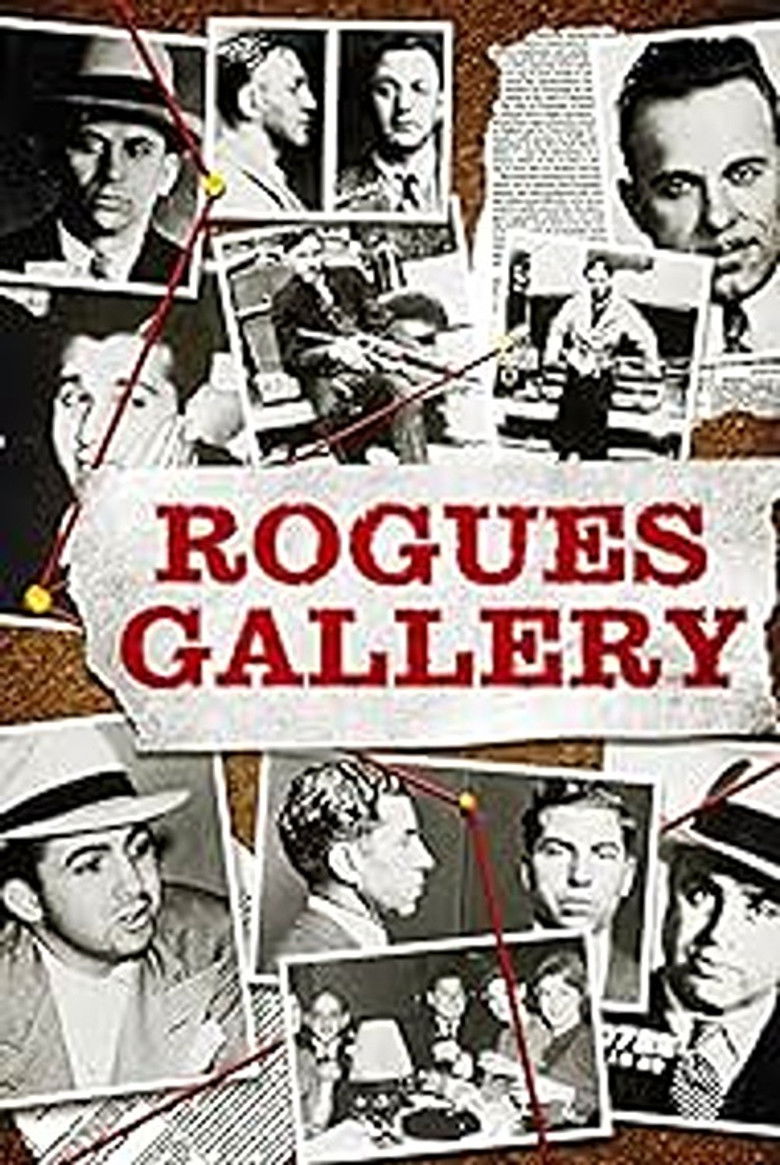
Season 1
01. Al Capone: Scarface
Born in Brooklyn, Alphonse Capone quickly realized that to thrive in the brutal New York underworld, one had to be both smart and ruthless. Initially a rising thug, his notoriety soared when he moved to Chicago to work with Johnny Torrio. 'Scarface' mastered not only the crime world but also manipulated the press.
02. Ben 'Bugsy' Siegel: The Father of Las Vegas
Born Jewish, Benjamin 'Bugsy' Siegel grew up proving himself on New York's tough, primarily Italian streets. Teaming up with 'Lucky' Luciano and Meyer Lansky, he gained notoriety with Murder Inc., but his real calling card was his Hollywood charm. His legacy was sealed when he turned the dream of a desert casino into a world-famous attraction. Now, Las Vegas and 'Bugsy' are forever linked.
03. John Dillinger: Public Enemy #1
John Dillinger from a small Indiana farm became one of America's most notorious bank robbers. Not inherently violent, prison turned him into a big-time criminal. Dillinger's first gang wrought havoc across the Midwest, robbing banks and, eventually, killing a police officer. After a prison escape, he led a new gang with 'Baby Face' Nelson, becoming a folk hero before his eventual capture.
04. Bonnie & Clyde: Lovers on the Run
Bonnie Parker and Clyde Barrow, America's most famous criminal duo, began their journey in a Texas town. Clyde's incarceration hardened him, and following release, he brought Bonnie into the Barrow Gang, with his older brother Marvin 'Buck' Barrow and friend W. D. Jones. Together, they robbed banks and stores, creating a legendary crime romance that lasted two years and ended tragically in a car, in each other's arms.
05. Charles 'Lucky' Luciano: Organizer of Organized Crime
Born in Sicily, Charles Luciano immigrated to the U.S. In corrupt New York City, he united figures like Meyer Lansky and Ben 'Bugsy' Siegel to eliminate old-world mob bosses and formed the first crime syndicate, making the Mafia stronger than ever. After his banishment, 'Lucky' Luciano watched his empire decline under weaker leadership and hard drug dealing, never to return to the land he transformed.
09. Dutch Schultz: The Mob Outsider
Arthur Simon Flegenheimer, better known as Dutch Schultz, New York's 'Beer Baron of the Bronx', entered the $20 million Harlem numbers racket by age 33, earning J. Edgar Hoover's title of Public Enemy #1. District Attorney Thomas Dewey relentlessly pursued him for tax evasion. The Big Six syndicate and Murder Inc. sought to eliminate him. Known for violence, Schultz aimed to assassinate Dewey but ultimately met his own demise.
06. Sam Giancana: Boss of Bosses
Sam 'Momo' Giancana rose to power during the Capone years in Prohibition-era Chicago. By 1957, J. Edgar Hoover denied an 'Underworld' until fifty mobsters were caught at a summit. Giancana's high-profile relationships with Phyllis McGuire and Frank Sinatra kept him in the spotlight. Ultimately, he was shot point-blank in his home, likely by jealous mobsters.
07. Meyer Lansky: Mogul of the Mob
Meyer Lansky, a poor Russian immigrant, became a key figure in organized crime. A savvy businessman, he gained respect from 'Lucky' Luciano after refusing to pay a street thug. Alongside Luciano and 'Bugsy' Siegel, he overthrew New York's old Mob and expanded gambling to Miami and Cuba. However, after Castro took over, Lansky faced U.S. Customs harassment and was deported from Israel back to the U.S.
08. Mickey Cohen: Hoodlum with a Hear
Raised in Boyle Heights, Mickey Cohen rose to power by navigating corrupt police in 1940s Los Angeles. His influence began with bookies and slot machines, fronted by legitimate businesses. Cohen mingled with stars like Frank Sinatra and Sammy Davis Jr. He faced harassment upon release and was ultimately sent back to prison after the McClellan hearings.
10. The American Mob
A concluding overview exploring the rise and fall of the American Mob, featuring key figures like Capone, Lansky, Siegel, and others. These ruthless bootleggers and racketeers extorted the poor and bribed officials while valuing loyalty and family above all. Known as 'The Mob', they are integral to America's history as part of the secretive Mafia.